Jeff Stevens Discusses Innovation and Growth
In this podcast, ENSCO President Jeff Stevens explains how the company works closely with customers before engineering begins, invests in early demonstrations and facilities, and adapts existing technology to deliver solutions faster. He highlights ENSCO’s CMMC Level 2 certification, mission-focused recruiting, and long-standing customer relationships as strengths, and discusses growth opportunities in railway research, space launch, and acoustic drone detection.
Sep 17, 2026 | Federal News Network | The Federal Drive with Terry Gerton
This conversation is part of the Fed Pulse: Federal contractors to watch series.
Read the full article: Early industry engagement reshapes government acquisition
Listen to the Podcast on YouTube (20:21 to 30:06)
Terry Gerton: The federal government is under pressure to move capabilities into the field faster. One result is a growing willingness to bring industry, researchers, and technology providers into the acquisition process earlier. In this segment of Contractors to Watch, sponsored by J.P. Morgan, Jeff Stevens, president of ENSCO, explains how companies are finding success with this approach.
Jeff, it’s great to have you. Thanks for joining me.
Jeff Stevens: Thanks for having me, Terry.
Terry Gerton: ENSCO is at an interesting point in the product life cycle. You tend to be where mission requirements are beginning to turn into actual systems. Before engineering begins, what are you trying to understand about the problem a customer is trying to solve?
Jeff Stevens: Before we begin any engineering, a cornerstone of our business has been building long-standing relationships and partnerships with our customers and understanding where they want to go. We first start by hearing what they need.
A big part of the culture we’ve built is one that drives innovation. We have our own innovation program, with an open forum for employees to bring forward problems our customers have. We fund small seed projects for proofs of concept and demonstrations, then bring those back to the customer with their support. Often, that moves to a larger stage of internal research and development funding.
Ultimately, our objective is to bring a solution to the end customer. That’s more important than ever as the government shifts toward a more solution-driven acquisition strategy.
Terry Gerton: It sounds almost as though you take customers shopping: they come in needing a “widget,” and you show them what you have in store. How does that help shape their requirements?
Jeff Stevens: That’s one of our favorite things to do. We love showing customers the new capabilities we’re building and what our team is thinking about.
Traditionally, the government would issue a solicitation with many requirements and invite everyone to bid against them. We’re seeing a shift toward bringing technology companies to the table to discuss the problem and what’s available today. A capability might not solve 100% of the problem, but it may solve 90% to 95% of it in a very short time frame. I think that shift is helping our country innovate faster, and it’s an area where we’re putting a lot of emphasis.
Terry Gerton: As you think about that faster product cycle—from concept and innovation through development—do the timelines ever get too tight? Are there places where you need more time?
Jeff Stevens: In our experience, the timelines are moving at the right pace. About a third of our business is in the commercial sector, and we’re adept at working at that faster pace.
It’s rewarding to see capabilities get into the hands of the warfighter and make a difference much earlier than we previously saw in our Department of War work. We’re also seeing interesting approaches in the Department of Transportation. In one recent example, they brought together industry, academia, and technology suppliers to address a long-standing safety challenge. They put the available capabilities on the table and established a short, iterative process to test, evaluate, and improve them. The objective is to get a result in about 18 months instead of what might have taken three to five years.
Terry Gerton: How have you structured ENSCO to be flexible and responsive in that environment?
Jeff Stevens: It’s important to anticipate what our customers will need. We’ve invested heavily in technology, capabilities, facilities, and labs in anticipation of those needs, so we’re ready to perform when customers come to us.
Terry Gerton: Have you had challenges with certification or qualification?
Jeff Stevens: We have not had any challenges. We recently received our CMMC Level 2 certification in the cybersecurity realm. It was a big investment and a big effort. From the start, we had a strong leadership team that could navigate the requirements, put the necessary tools and controls in place, and facilitate the cultural change.
We’re a company of engineers, scientists, and innovators, and they typically don’t like constraints. Our team has done a fantastic job creating an environment that lets them continue to innovate while meeting the requirements. Customer and ENSCO information is better protected, and we’re more prepared for evolving cyber threats.
Terry Gerton: Engineering talent is at a premium. For a specialized firm like ENSCO, what has changed about how you recruit and retain the people needed to solve highly technical problems?
Jeff Stevens: Our people are our most important asset, and attracting and retaining the best is one of our highest priorities. Several factors matter, but the most important is the impact employees can have through meaningful work.
It’s an easy sell when people know they’re saving lives on a battlefield, helping a space launch succeed, or preventing a train derailment. Those are some of the main areas where we work. We have great relationships with people coming out of the armed services; more than 15% of our workforce are veterans, and we recruit heavily from that community.
We also bring in people from industry. It’s a great position to be in when someone calls and says, “I want to work for your company because you’re the best at what you do.” I’ve had the privilege of receiving many of those calls.
Terry Gerton: You’ve been at ENSCO for more than 20 years. What has changed during your tenure?
Jeff Stevens: I started at ENSCO in 1999. At the time, we were more of a traditional government contractor, without as much process or maturity. That allowed a lot of innovation and freedom. As we set our sights on growth, we established more mature processes, took on different levels of risk, and invested heavily.
J.P. Morgan has been a critical part of our investment strategy over the last several years, helping fuel our growth.
Terry Gerton: As ENSCO has grown, it has stayed specialized in engineering. How do specialized contractors like ENSCO create the most value?
Jeff Stevens: Our strongest value proposition is that we always deliver. We’ve built trust and long-standing partnerships with customers over many decades. When they call us, they know we’ll deliver—even when they ask us to do something technologically challenging or the first of its kind.
Terry Gerton: What does ENSCO’s growth trajectory look like now?
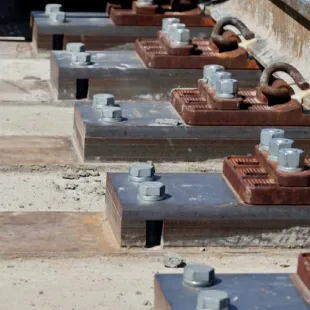
Jeff Stevens: It looks strong. A few years ago, we took on responsibility for operating and maintaining the world’s largest railway research center for the Federal Railroad Administration. It’s used by industry, suppliers, and the government.
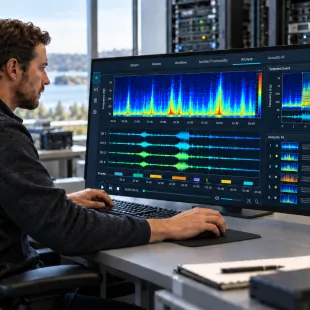
Space launch is also a big part of our business. The White House recently announced a target of 1,000 launches and reentries by 2030. We also do a lot of sensor work, particularly acoustic drone detection. That’s a rapidly increasing threat and an area where we’re heavily involved. The future looks very exciting for us.
Terry Gerton: I’d like to thank my guest, Jeff Stevens, president of ENSCO. Thanks, Jeff.
Jeff Stevens: Thank you, Terry. I appreciate it.